How to Summarize a Long PDF with a Precise Prompt
A structured method for summarizing a report or book PDF: define the purpose, chunk the file, preserve evidence and caveats, and review the result.
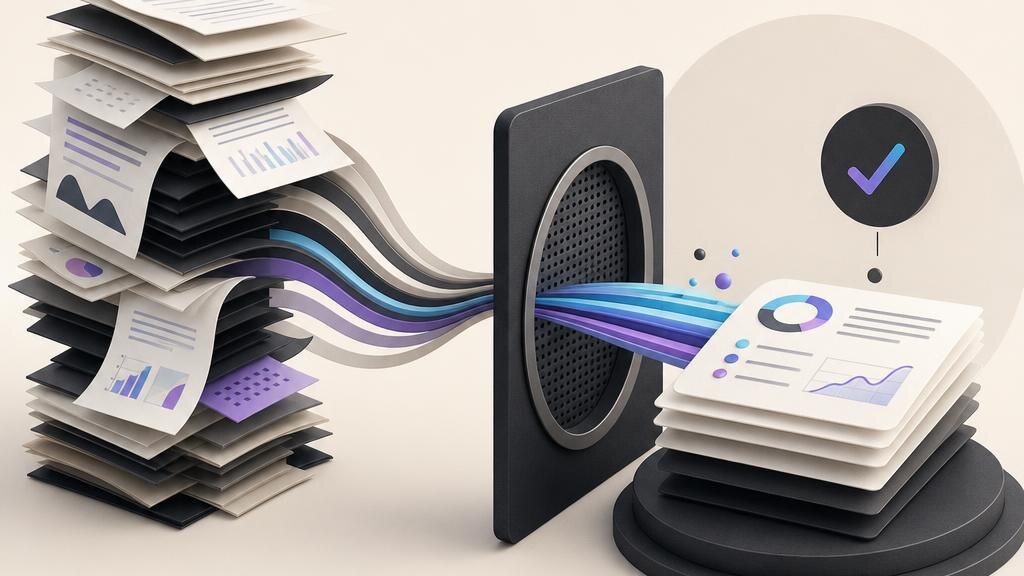
Define the summary before uploading
An executive brief is not the same as a study guide. Decide who will read it, what decision it supports, the target length, and the priority sections. For example: “I need a 700-word brief for a non-specialist manager deciding whether to read the full report; focus on the problem, method, findings, and limitations.”
Confirm that you may upload the file, remove sensitive data, and learn whether the tool reads tables, images, and appendices or skips them. “Summarize everything” is not a useful specification; it often produces generic prose and hides what matters.
A precise, auditable prompt
Use a template that separates text from inference: “You are a document analyst. Read the attached file. Extract its question, method, findings, numbers with units, limitations, and recommendations. Give a page number for each point or write not specified. Add no outside knowledge and do not turn correlation into causation.”
Add an output format, such as a three-column table for claim, evidence or page, and confidence. Request unclear terms and questions the file does not answer. These constraints make the summary easier to audit and expose where the model lacks support.
Chunk the document and carry context
For a long file, work in stages: request an outline and section map, summarize each chapter with the same structure, then ask for a synthesis that adds no new ideas. Label chunks clearly and keep intermediate summaries with page numbers so you can return to the original.
After each chunk ask: “What is the key claim, what evidence supports it, and what caveat limits it?” During synthesis say: “Compare the section summaries, remove repetition, and report conflicts rather than resolving them.” An omitted point in a summary does not prove it is absent from the document.
Review before relying on it
Check a sample from every paragraph against the original, especially numbers, negations, and conditional language. Ask for a list of verifiable claims and inspect it manually. For an important report, have a colleague or subject expert compare the summary with the purpose for which you will use it.
A summary supports reading; it does not replace the source for legal, medical, or financial decisions. Keep the original, record the tool and processing date, and disclose automated generation when appropriate. A sound workflow is permission, audience, chunking, cited summary, verification, and human editing.